
Almost never because of the drive itself. If your truck is delayed at a GCC border, the cause is usually one of a small number of things, and most of them are preventable before the truck ever leaves Dubai. Here is what actually happens, ranked by how often we see it.
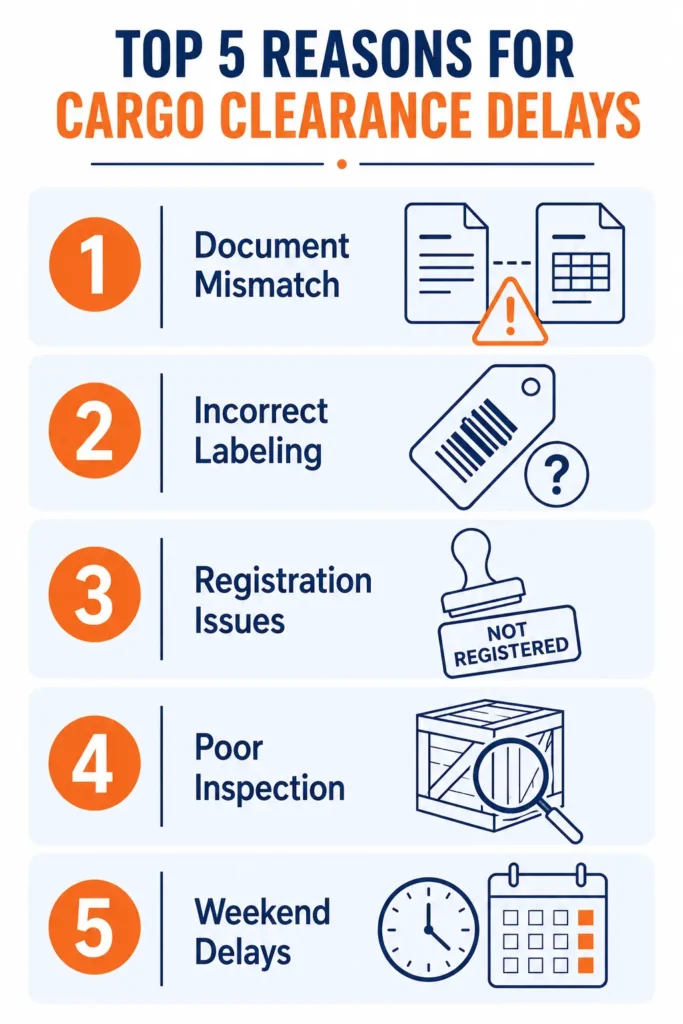
1. Documents That Do Not Match Each Other
This is the single most common cause, and it is not what most shippers expect. It is rarely a missing document — it is a commercial invoice and packing list that disagree on a weight, a quantity, or a description. Customs officers are trained to catch exactly this kind of inconsistency, and once they find one, the whole shipment gets held for review rather than just the item in question.
2. Incorrect HS Code Declarations
Every line item on your invoice needs an HS code that genuinely matches the physical goods. A misclassified item — even an honest mistake — is one of the most common reasons cargo gets flagged for physical inspection, which can turn a routine crossing into a multi-hour or multi-day hold.
3. Missing Route-Specific Registration
Saudi Arabia requires SABER/SASO registration for over 100 regulated product categories. If your goods fall into one of those categories and the registration is not in order, that shipment gets stopped regardless of how clean the rest of the paperwork is.
4. Physical Inspection
Some shipments get selected for physical inspection regardless of documentation quality — this is a normal part of how border customs works, not a sign that something is wrong. The difference is how long it takes: cargo with clean, consistent paperwork moves through inspection faster than cargo where officers also have to resolve a documentation question at the same time.
5. Border Volume and Timing
Even with perfect documentation, timing matters. Thursday and Friday evenings — the run-up to the regional weekend — consistently see the heaviest queues at every crossing we use, and wait times that might be 30 minutes on a quiet weekday can stretch past three hours during that window. The days immediately before and after Eid or other public holidays compound this further. See our border crossing guides for crossing-specific timing detail.
What a Normal Delay Looks Like vs. a Real Problem
A few hours of queue time during a known peak window is normal and expected — it is not a sign anything has gone wrong. A shipment held for a full day or more, especially outside peak periods, usually means a genuine documentation issue that needs resolving, and that is when you should expect us to be in direct contact with you about it, not silence.
What We Do Differently
We check your commercial invoice against your packing list for consistency before the truck leaves Dubai — not as a courtesy, but because that single check prevents the most common cause of delay on this list. We also flag SABER/SASO requirements at booking rather than letting them surface for the first time at a Saudi border. See our full documentation checklist for what we check on every shipment.
Frequently Asked Questions
How long is a normal border delay?
With clean documentation, most crossings clear in 2 to 4 hours even during moderate volume. Anything stretching well beyond that, particularly outside a known peak window, is worth asking direct questions about.
Who do I contact if my shipment is delayed?
Contact us directly — we track every shipment through its crossing and can tell you specifically what is happening rather than leaving you to guess.
Can I avoid delays entirely by choosing the right day to ship?
You can reduce the odds significantly by avoiding Thursday/Friday evening departures and the days immediately around major holidays, but the documentation consistency check matters more than timing — a clean shipment moves faster even during a busy window than a messy one does during a quiet one.
Ask us about your specific route → | See all insurance & customs guides →