
Six real crossings behind our five GCC routes — what each one actually involves, and when congestion hits hardest.
- 6 crossings covered
- Live congestion patterns
- Full documentation checklists
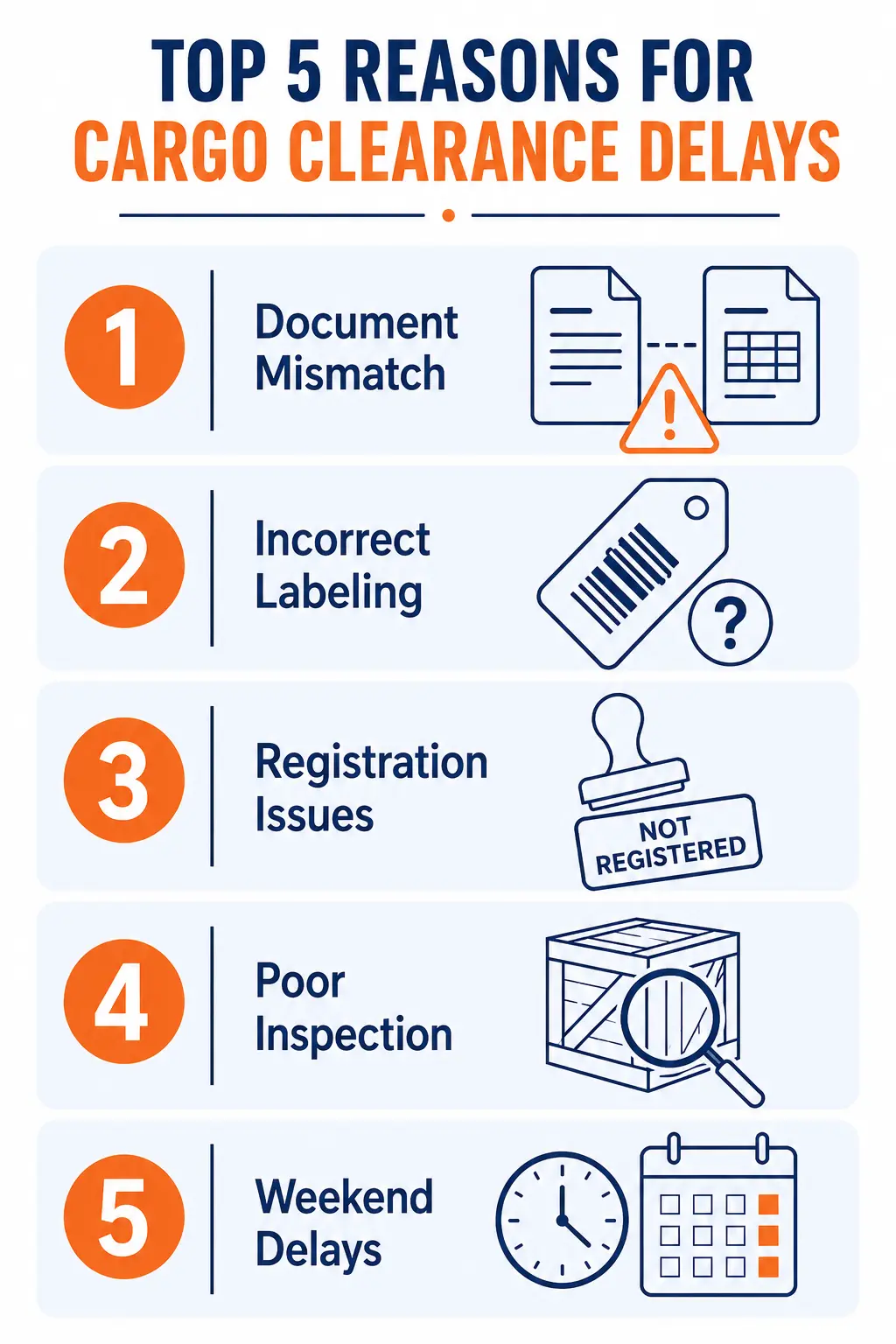
A route and a border crossing aren’t the same thing. Our five GCC routes use six actual crossings between them, and knowing which one your cargo will cross — and what happens there — is usually more useful than knowing the country name alone.
Why a Land Border Isn’t a Port
Clearing cargo at a land border works differently from clearing it at a sea port or airport, and it’s worth understanding why before you book. Ports and airports run on more staffing, more processing infrastructure, and more physical space to handle complex shipments in parallel. A land border has a fixed number of lanes and a queue that only moves as fast as the truck in front of you. When a crossing gets busy, there’s no overflow capacity to absorb it — the backlog just grows at the gate. That’s the whole reason we specialize in road freight specifically rather than treating it as one mode among several: the failure points are different, and so is the expertise needed to route around them.
When Crossings Actually Get Busy
Congestion at GCC land borders follows a real, predictable pattern, not a random one. Thursday and Friday evenings — the run-up to the regional weekend — consistently see the heaviest queues, and wait times that might be 30 to 45 minutes on a quiet weekday can stretch past 3 hours during that window. High-volume crossings like Al Ghuwaifat/Al Batha and the Saudi–Kuwait border see truck queues extend up to 4 hours during peak periods, and the days immediately before and after Eid or other public holidays compound that further. We build departure timing around these windows rather than promising a transit estimate that ignores them.
The Crossings We Use
- Al Ghuwaifat / Al Batha — UAE–Saudi Arabia, the gateway for four of our five routes
- Salwa / Abu Samra — Saudi–Qatar, the second border on the Dubai–Doha route
- King Fahd Causeway — Saudi–Bahrain, a 25km toll bridge with its own traffic system rather than a conventional land border
- Hatta / Al Wajajah — UAE–Oman, our direct crossing from Dubai
- Al Ain / Buraimi — UAE–Oman, an alternative crossing via Abu Dhabi
- Al Khafji — Saudi–Kuwait, the second border on the Dubai–Kuwait route
The causeway is the one crossing on our network that runs its own dedicated traffic system — the King Fahd Causeway Authority’s JESR platform provides live traffic updates and toll prepayment, and frequent-crossing arrangements can meaningfully cut both cost and wait time. It’s a genuinely different piece of infrastructure from the other five crossings, which is why the causeway guide covers it separately rather than folding it into a generic border template.
Pickup Across Dubai
Wherever your cargo crosses, it starts in Dubai. We collect from across the city’s trading and industrial zones — Al Quoz, Ras Al Khor, Jebel Ali, Dubai Investment Park, and Deira are our most common pickup points — and route accordingly depending on which of the six crossings your specific shipment needs. Give us your Makani number when you book and we’ll confirm pickup timing regardless of where in the city you’re based.
On the Dubai Side
Every shipment also has to clear its way out of the UAE before it reaches any of these crossings. Export documentation and manifest submission run through Dubai Customs, and getting that paperwork right at the Dubai end is what keeps it from becoming a problem hours later at the actual border — not a formality to rush through, but the step that determines whether the rest of the journey goes smoothly.
Frequently Asked Questions
Why does the same border have such different wait times on different days?
Volume, mainly. Thursday and Friday evenings carry the heaviest regional weekend traffic, and the days around Eid or other public holidays add further congestion on top of that. A crossing that clears in 30 minutes on a Tuesday morning can take hours on a Thursday evening.
Is there a way to avoid the worst congestion?
Timing departures to avoid known peak windows is the most reliable lever we have — we plan around Thursday/Friday evenings and the days surrounding major holidays rather than dispatching without regard for the calendar.
Does every route cross more than one border?
No — Saudi Arabia and Oman are direct, single-border routes. Qatar, Kuwait, and Bahrain all transit Saudi Arabia first, which means two separate customs authorities rather than one.
Which crossing will my specific shipment use?
It depends entirely on your destination — check the route overview for a breakdown by country, or tell us your destination directly and we’ll confirm the exact crossing before you book.
Want the operational detail on a specific crossing rather than the overview? Start with Al Ghuwaifat/Al Batha, since it’s the gateway for most of our routes, or ask us directly which one applies to you.