
For pharmaceuticals, cosmetics, flowers, and other temperature-sensitive cargo. Our reefer trucks are pre-cooled before loading, not after — because Gulf summers punish every degree of exposure.
- Quote within the hour
- In-house customs
- No hidden charges
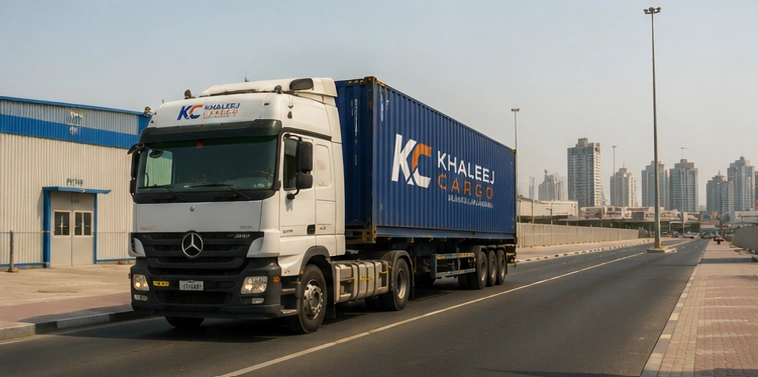
Temperature-controlled trucking for cargo that can’t survive a Gulf summer on the road. Pharmaceuticals, cosmetics, fresh-cut flowers, and temperature-sensitive chemicals all need a cold chain that holds up against conditions most trailers were never designed for.
The Failure You Don’t See on the Temperature Log
The dangerous cold-chain failures in this region rarely look like one dramatic breach. A reefer clears its origin point, documentation is in order, the truck departs on schedule, and the temperature log — reviewed later — shows readings broadly within range. On paper, everything is compliant. The real risk is accumulated exposure: short, routine dwell times at border inspection points, brief yard holds, queueing during peak crossing hours — none dramatic enough to register as a formal excursion on their own, but compounding across a multi-hour crossing in 45–48°C ambient heat. A system built only to flag threshold violations won’t catch that pattern. We build our reefer schedules around minimizing dwell time specifically, not just around holding a temperature range on paper.
“Al Batha in August is the one that worries me on reefer loads, not Al Khafji — the dwell time during a bad afternoon can eat the thermal buffer a pre-cooled trailer gives you before the compressor’s even struggling. We’ve started scheduling reefer departures specifically to hit that border overnight instead of midday, even if it means the driver waits a few hours at the yard first.”
That is the kind of dwell-time exposure our border delay guide covers in more detail — worth a read if you are planning a reefer run through peak summer hours.
| Product type | Required temp range | Max safe dwell time before risk |
|---|---|---|
| Vaccines & sensitive pharma | 2°C to 8°C | Under 30 minutes at peak ambient heat |
| General pharmaceuticals | 15°C to 25°C | Under 60 minutes at peak ambient heat |
| Cosmetics & personal care products | 15°C to 25°C | Under 60 minutes at peak ambient heat |
| Fresh-cut flowers & ornamental plants | 2°C to 8°C | Under 30 minutes at peak ambient heat |
| Temperature-sensitive chemicals | Varies by product | Confirm exact margin at booking |
Dwell time thresholds are general guidance — tell us your product’s exact range and we’ll confirm safe margins for your specific route and border.
Why Pre-Cooling Isn’t Optional
A trailer that’s only cooled after loading starts the journey already behind — the refrigeration unit spends its first hours fighting warm trailer walls and warm air instead of maintaining a stable range. Ours are pre-cooled before your cargo goes in, so the unit is maintaining from the first kilometre, not catching up.
What We Move
- Pharmaceuticals and medical supplies
- Cosmetics and personal care products
- Fresh-cut flowers and ornamental plants
- Temperature-sensitive chemicals and industrial materials
Reefer cargo runs on all five of our routes, though the calculus changes with distance — a direct run to Oman carries far less cumulative exposure risk than the long Saudi transit leg on our Kuwait route, and we plan accordingly.
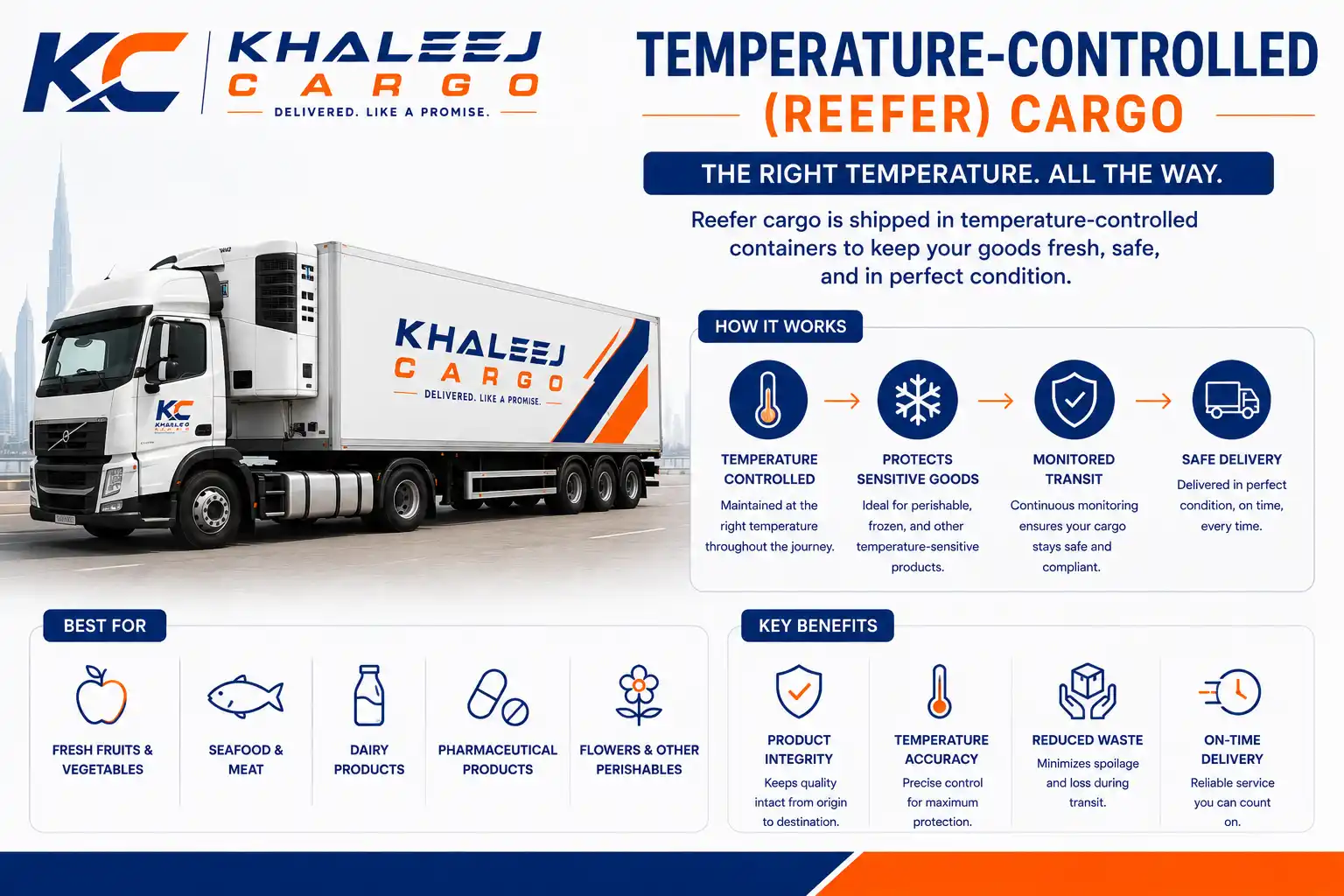
Pickup Across Dubai
Temperature-sensitive loads often originate from Dubai Investment Park and Al Quoz, where a fair share of the city’s pharma and cosmetics distributors are based. We coordinate pickup timing specifically to minimize how long your cargo sits at ambient temperature before it reaches a pre-cooled trailer — tell us your pickup location and loading window when you book.
Cargo Insurance
Given the value and sensitivity of most reefer cargo, we offer insurance covering both transit loss and temperature-related spoilage. Ask for the specifics when requesting your quote — coverage terms for temperature-sensitive goods are worth confirming before you ship, not after.
Also worth reading: how Saudi Arabia’s new empty-reefer-truck rule affects capacity on this route.
Frequently Asked Questions
What temperature range can you hold?
Tell us your product’s required range when booking and we’ll confirm we can maintain it across the full route, including every border stop u0026mdash; don’t assume a standard range fits your specific cargo.
Does a clean temperature log guarantee my cargo wasn’t compromised?
Not entirely u0026mdash; a log that stays within range can still mask cumulative exposure from repeated short dwell periods. This is exactly why we prioritize minimizing time stationary at borders, rather than relying on the log alone to prove integrity.
Does reefer cargo clear customs differently from standard cargo?
The documentation is the same, but we sequence border processing to reduce dock time specifically for temperature-sensitive loads wherever the crossing allows it.
Moving something that can’t handle the heat? Tell us what and where, or check our other road cargo options if reefer isn’t quite what you need.